The Alteration Edit: Why One Small Fix Beats Another Shopping Trip
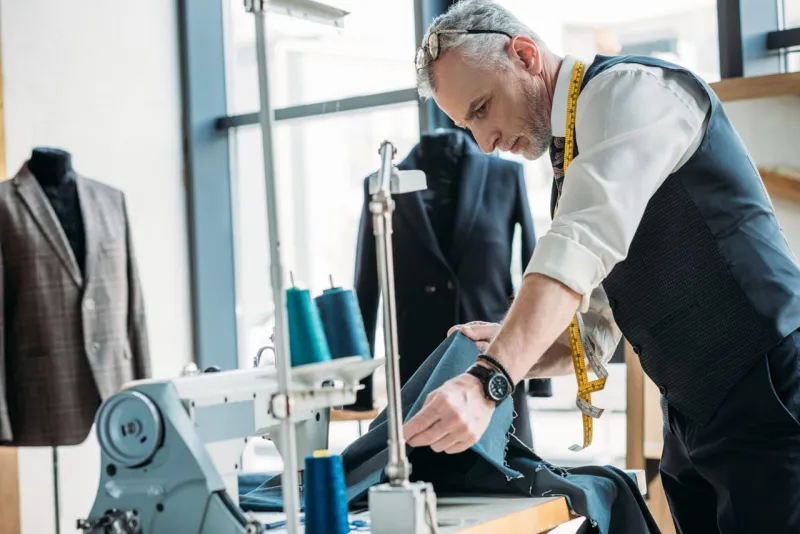
Photo: tailor pinning trouser hem fitting sewing studio, via www.kmkm.com
There is a particular kind of shopping optimism that convinces us the next purchase will solve the problem. The trousers will be the right length. The sleeves will hit exactly where they should. The waist will sit flat. And then we get the item home, wear it twice, and remember that most clothes are made for an average that almost nobody actually is.
My argument is simple: before you buy another version of the same thing, take the one you already own to a tailor. Not because alterations are glamorous or because every garment deserves saving, but because a small, precise fix often does more for how you look and feel than three new purchases combined. A hem can turn a charity-shop find into a favourite. A shortened sleeve can make an old jacket look intentional. A waistband adjustment can rescue a skirt you had quietly written off.
The Illusion of the New Purchase
New clothes arrive with a fantasy attached. They are photographed on a model, pressed to perfection and lit like a film set. In real life, they still need shoes, underwear, a bag and a body that moves. A new pair of trousers can still be too long. A new blazer can still be too wide at the waist. The difference is that we tend to accept the flaws in new things because we have just paid for them.
Alterations ask us to look at what we already have with the same critical eye. That is less exciting than a shopping bag, but it is usually more effective. A £15 hem on trousers you already like is often a better use of money than a £70 pair that will need the same £15 hem anyway.
What a Tailor Actually Sees
A good tailor is not just a person with a sewing machine. They are someone who understands proportion. They look at where a hem breaks on your shoe, whether a sleeve ends at the wrist bone or halfway down your hand, and whether a waistband is sitting where it should. They notice the things we stop seeing because we are used to them.
This is why the fitting matters more than the price list. A tailor who pins a hem while you are wearing the shoes you plan to wear with the trousers will give you a better result than one who works from a number. A tailor who asks you to walk, sit and reach for something is checking how the garment behaves in real life, not just how it looks in the mirror.
The Three Fixes Worth Doing First
If you are new to alterations, start with the three that make the biggest difference. First, trouser hems. A clean break at the shoe changes the line of the whole leg and makes even inexpensive trousers look considered. Second, sleeve length on jackets and coats. A sleeve that ends at the right point makes an outfit look sharper and stops a jacket from swallowing your hands. Third, waistbands. Taking in a waistband by an inch or two can turn a skirt or pair of trousers from “almost” to “actually mine”.
After those, consider taking in the side seams of a dress, shortening a coat hem, or adjusting the shoulders of a simple top. But be realistic: not every garment is worth the work. A complicated lined jacket with shoulder issues is often a bigger job than it looks, and a cheap fabric that is already thinning may not survive the process.
What to Ask at the Fitting
Go prepared. Bring the shoes you will wear with the garment, and wear the underwear or layers you plan to wear underneath. Ask for the price before the work starts, and ask whether that includes pressing. Ask how much seam allowance is available — the extra fabric inside the seam — because that determines whether a garment can be let out later or only taken in.
Ask for the turnaround time, especially in November and December when tailors are busy with party-season requests. Ask what happens if the fit is not right after the first adjustment. A good tailor will expect you to come back for a second look. And ask them to pin the hem while you are standing naturally, not while you are holding yourself like a soldier on parade.
When to Walk Away
Walk away if the shoulders do not fit. Shoulder adjustments are expensive, complicated and rarely worth it on a high-street jacket. Walk away if the fabric is damaged, pilled beyond repair or so thin that the seams will not hold. Walk away if the alteration costs more than the item is worth to you, unless the item is genuinely special. And walk away if the tailor does not listen to what you actually want.
A good alteration should feel like a conversation, not a gamble. If you are told that everything is possible without any discussion of cost, limits or how the garment will wear, be cautious. The best tailors are honest about what will work and what will not.
The Charity-Shop Test
Charity shops are full of pieces that are nearly right. A wool skirt with a beautiful fabric but a hem that sits awkwardly. A blazer with lovely buttons and sleeves that are just too long. Before you buy, check the seams, the lining and the fabric content. Look for garments with enough seam allowance and simple construction. A £6 skirt plus a £15 hem is still a bargain if it fits you properly afterwards.
This is not about turning every purchase into a project. It is about recognising that fit is not a luxury extra. It is the difference between clothes you wear and clothes you merely own.
A Local Habit, Not a Luxury
Using a local tailor should be as ordinary as going to the dry cleaner. Many high-street dry cleaners offer alterations, and independent tailors often charge less than you expect for simple fixes. Build a relationship with someone nearby. Take one item, see how it goes, and go back if the work is good.
The point is not to become a person who alters everything. It is to stop expecting new purchases to fix a fit problem that a small, skilled adjustment could solve. One good hem, one shortened sleeve, one adjusted waistband — that is often the quiet difference between a wardrobe that works and a wardrobe that keeps promising to.