One Scent, One Story: Why Your Fragrance Deserves More Thought Than Your Handbag
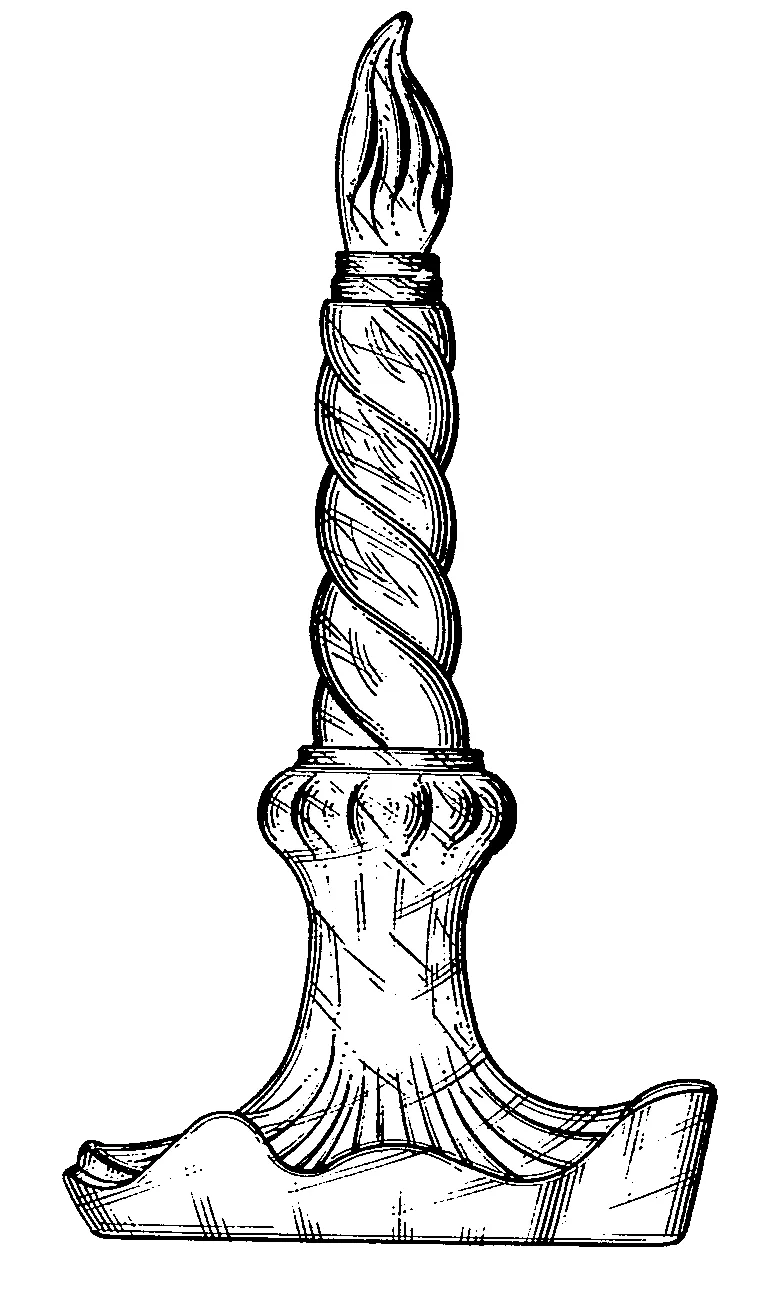
Photo: Unknown artist, patent drawing for a perfume bottle in the form of a candle in holder for 'Sleeping' fragrance. The original design by Marcel Vertes for Elsa Schiaparelli., Public domain, via Wikimedia Commons
I can tell you exactly which coat my friend Priya will be wearing in February. I can tell you the shape of her glasses, the colour she paints her nails, the fact she has never once worn a trainer in my presence. What I couldn't tell you, until recently, is what she smells like. Which is strange, isn't it? Because scent is the thing people remember after the coat has come off.
We treat fragrance as an afterthought. A last-minute purchase at the airport, a gift set in January, a spritz on the way out of a department store because the tester was right there. And yet it's the most intimate, most consistently present part of how we're perceived. It arrives before we say anything and it lingers after we've gone.
Scent as a signature, not a season
The current approach to fragrance is basically fashion's approach to trend cycles — a new launch every six weeks, a viral bottle on the timeline, a scented candle that smells like a bakery. It's fun. I'm not immune. But there's a quieter, more interesting thing that happens when you stop chasing and start committing.
A signature scent does something a wardrobe can't. It becomes shorthand. People associate it with you specifically — not with a brand, not with a season, not with the influencer who recommended it. That's genuinely rare in a culture where most of what we buy is designed to be recognisable to everyone.
And here's the part I find persuasive: it's one of the few beauty decisions that gets cheaper and better over time, rather than more expensive and more frantic.
The first-spritz trap
Most fragrance decisions are made in the first ninety seconds, which is roughly the worst possible window. Top notes — the bright, citrusy, sparkling bit — are designed to grab you. They're the opening line of the conversation. They are not the conversation.
What you actually want to know is what's left after four hours, on your skin, in real conditions. That's the middle and the base: the woods, the musks, the resins, the things that stay. Almost nobody tests for that in a shop, because shops are designed for the first ninety seconds.
So test differently. Ask for a sample or a spray on skin, walk away, and live with it. If a fragrance is still pleasant on your wrist when you're doing the washing-up at nine in the evening, that's information no amount of in-store sniffing can give you.
Testing in British weather (which is its own problem)
Cold air flattens fragrance. This is a real, practical thing that nobody warns you about. A scent that blooms beautifully in a warm shop can go almost silent on a drizzly fifteen-minute walk to the station. Conversely, central heating amplifies everything — the same fragrance that felt subtle at 8am can fill a small office by lunchtime.
My approach, refined over several expensive mistakes: test in the conditions you'll actually wear it in. Spray it on a cold morning, not a warm afternoon. Wear it to work, not to a party. Notice whether it develops pleasantly across a full day of weather changes, because a British November day contains at least three of them.
And test on skin, always. Paper strips lie — they can't tell you anything about how a scent interacts with your own chemistry, and everyone's chemistry is different enough that recommendations are only ever a starting point.
The four-hour check and the scarf test
The four-hour check is simple: if you can't smell it on your wrist at hour four, it's not a signature, it's a spritz. That doesn't make it bad — plenty of lovely fragrances are deliberately light — but it does mean you'll be reapplying three times a day, which gets expensive.
The scarf test is my favourite and slightly unhinged. Spray a fragrance on a wool scarf, leave it overnight, and smell it in the morning. What survives is the base. What disappears is the marketing. If the morning version is something you'd genuinely want to smell on a cold commute, you've found something with real bones.
High street finds and considered splurges
I don't think you need to spend £200 on a signature scent. I do think you need to be honest about what you're paying for at each price point.
At the high street end, you're often getting a very good approximation of a familiar idea — bright, wearable, uncomplicated. There's nothing wrong with that, and some of the best everyday fragrances live in that bracket. They're also low-risk entry points if you're still working out what you like.
At the considered-splurge end, you're paying for depth, for longevity, and often for materials that develop rather than sit still. A good niche or classic fragrance rewards wearing it repeatedly, which is precisely the point of a signature.
The sensible route, in my view: find your direction with something affordable, then once you know what you actually respond to — woods, iris, salt, smoke, whatever it turns out to be — invest in one bottle that does it properly. One bottle you love beats five bottles you quite like, every single time.
Two scents, one identity
A practical note. Most people who claim to have a signature scent actually have two: one for the day, one for the evening. That's not cheating, it's just realism. A fragrance that's right for a Tuesday morning meeting is rarely the one you want at 8pm on a Friday.
Keep them related, though. If your day scent is clean and green, let your evening scent share that crispness rather than going full vanilla-oriental. The through-line is what makes it read as you rather than as two unrelated purchases.
The point of all this
We spend enormous amounts of energy on how we look and comparatively little on how we're remembered. A wardrobe gets replaced every few seasons. A signature scent compounds. It becomes part of the shorthand people use for you — the way Priya is coats and glasses and no trainers, the way you might quietly become the one who smells like that.
That's worth a proper afternoon of testing. Not a ninety-second spritz by the till.