The Considered Counter: Hosting From One Small Surface
There is a particular kind of party setup that looks expensive in photographs and exhausting in real life: the coordinated napkins, the themed ice bucket, the cheese board arranged like a still life. In a small UK flat, that approach rarely survives contact with a coat pile, a narrow hallway and four people trying to get to the kitchen at once. The smarter move is not more. It is one surface, done properly.
Start with the surface, not the shop
Choose the spot first. A kitchen counter, a console table, a shelf that is not already groaning under post and keys. Clear it completely. Then put back only what earns its place: a tray, a carafe, a short row of glasses, one candle, perhaps a small vase. You are not building a display cabinet. You are creating a landing pad for drinks and a visual cue that the evening has begun.
The temptation is to buy a new tablecloth, new coasters and a seasonal garland because the room feels unfinished. Resist that for a week. Most flats already contain enough to make one corner look deliberate. A plain tray from the kitchen, a water glass used as a vase, a linen napkin folded once: these are not compromises. They are the point. A single styled surface tells guests where to put their glass and what kind of evening this is. It also stops the whole flat from becoming the drinks table.
Light the room before you style it
If you only do one thing, deal with the overhead light. A bright central bulb makes even good glassware look like a canteen. Switch it off and use two lamps at different heights, or one lamp plus a candle on the counter. Warm bulbs, not icy white ones. The aim is not darkness; it is a room that feels like it has settled.
Lighting is also practical. Guests need to see where they are putting their drink, and you need to see whether the ice has run out. A small lamp near the surface does both jobs. Candles should be unscented if you are serving food, or very lightly scented and lit only ten minutes before the doorbell. A candle that announces itself from the hallway is not hospitality. It is a warning.
Choose glass you actually use
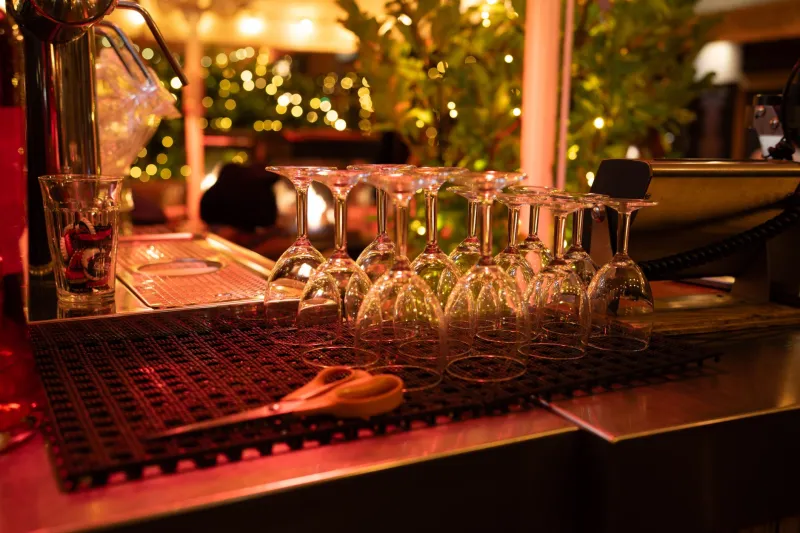
You do not need a matching set of twelve. You need enough glasses for the number of people coming, plus two spare, and they should be clean and dry. A short row of tumblers on a tray looks intentional. A cupboard full of novelty mugs does not. If you have two types of glass, use them together: taller ones for a long drink, smaller ones for water. The mismatch is fine. The disorder is not.
A carafe of tap water, filled before anyone arrives, is the most underrated item on the surface. It slows the drinking, it makes the setup look complete, and it means you are not fetching water every twenty minutes. Add a small bowl for lemon or lime if you like, but do not let it become a garnish station. This is a counter, not a cocktail bar.
Keep the drinks list short enough to remember
A short drinks list looks confident. A full bar looks like a licensing issue. Choose three options: one long, one short, one no-alcohol. A bottle of something sparkling in the fridge, a simple highball with a spirit you actually like, and a good soft option with ice and citrus. That is enough. You are hosting people, not opening a pop-up.
Write the list on a small card if it helps, but keep it to three lines. Place ice in a bowl with a spoon, not in a bag on the counter. Put the bottles at the back of the surface so the glasses and water sit in front. This is the difference between a considered welcome and a queue. Guests should be able to make a drink without asking you where anything is, which means you get to stand still for a minute and actually talk to them.
Add scent with a light hand
Scent is the easiest thing to overdo. A diffuser in the hallway, a candle on the counter and flowers on the table can add up to a headache. Pick one. If the room already smells of cooking, skip the candle entirely and open a window for ten minutes before guests arrive. Fresh air is a hosting strategy, not a failure.
If you want a scent, make it something clean and quiet: fig, cedar, a little citrus. Nothing that competes with the food. And do not light it until the room is ready. An unlit candle still looks considered; a candle that has been burning since lunchtime looks like you forgot to blow it out.
Let the food be the second act
The surface is the welcome, not the whole menu. Keep food simple: one warm thing from the oven, one cold thing from the fridge, and something people can pick up without a plate. A bowl of olives, a sliced loaf, a dish of something warm with a spoon. If you are buying in party food from M&S or Waitrose, that is not a moral failing. It is time management.
Stage the food somewhere else if you can, even if that somewhere else is the hob with a chopping board over it. The drinks surface should stay uncluttered. When it fills up with sausage rolls and used napkins, the whole thing collapses. Guests read a clear surface as calm, and calm is the thing they remember.
What restraint actually buys you
Themed parties can be fun, but they are rarely relaxing. A single styled surface does a different job: it makes a small flat feel handled. It says someone thought about where the glass would go, whether the light was warm, and whether the water was cold. That reads more expensive than another trip to the shops because it is more expensive, in the only currency that matters at 7pm on a Friday: attention.
Before the doorbell, do a five-minute reset. Wipe the surface. Light the candle. Fill the water. Put out one bowl of something. Then stop. The point of hosting from one small surface is not to prove you have more. It is to make the room easy to be in. Restraint, when it is deliberate, looks like generosity. And it leaves you with enough energy to enjoy your own party.