The In-Between Forecast: What to Wear When November Can’t Choose a Season
Twelve degrees sounds harmless on paper. In a British November, it is a daily negotiation: warm enough for the walk to the station, light enough for a packed bus, smart enough for the office, and robust enough for the sort of drizzle that arrives sideways. This is the forecast that cannot decide, and it asks more of your wardrobe than the depths of January.
The temptation is to dress for the number on your weather app. The better approach is to dress for the entire journey — the cold platform, the overheated carriage, the damp pavement, the pub that has already turned the heating up. That means layers you can remove without losing the plot, fabrics that breathe, and shoes that can cope with a British pavement in November.
Start With a Base That Can Breathe
The layer closest to your skin does most of the quiet work. A fine merino knit, a cotton poplin shirt or a lightweight cashmere jumper will regulate temperature far better than a thick sweatshirt or a synthetic top that traps heat. If you run warm on public transport, choose a base with a little natural fibre and keep the bulk for the outer layers.
This is also the moment to retire the heavy autumn knits that only work in a cold office. A thin turtleneck under a shirt, or a silk camisole under a fine knit, gives you warmth without turning your commute into a sauna.
The Three-Piece Formula That Actually Works
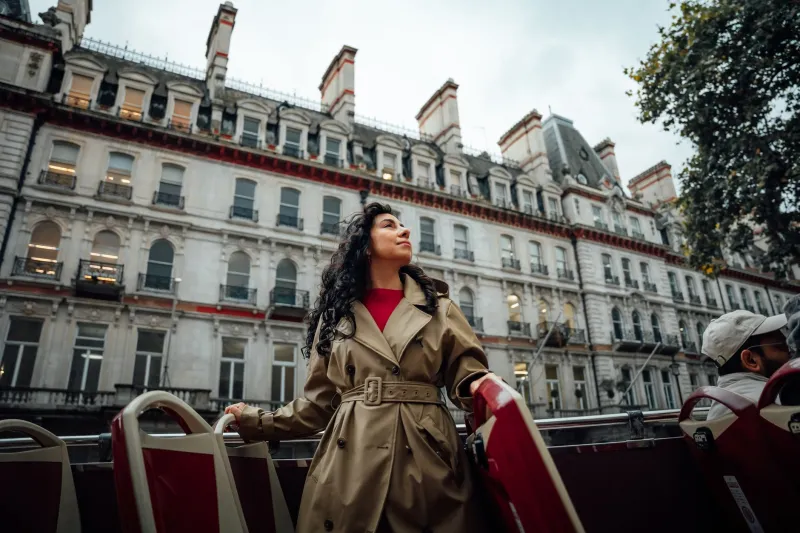
For most in-between days, think in threes: base layer, mid-layer, weather layer. The mid-layer is the one that does the changing — an unlined blazer, a lightweight quilted gilet, a cotton overshirt or a fine cardigan. The outer layer can then be a trench, a raincoat or a wool coat that is not quite your deepest winter option.
A useful formula for a working day is a fine knit, a relaxed blazer and a trench. For a weekend, try a shirt, a quilted gilet and a showerproof parka. The point is not to wear three heavy pieces; it is to wear three thin ones that can be shed in order. If you can remove the mid-layer and still look dressed, the outfit is doing its job.
Fabrics That Earn Their Place
Wool, cotton, linen blends and technical rainproof fabrics are your allies. They handle changes in temperature and look better after a long day than fabrics that crease at the first sign of a bus seat. Avoid heavy melton coats for anything above about ten degrees, and be wary of faux fur or thick fleece linings if you will be indoors for much of the day.
Denim is fine, but think about weight. A mid-weight jean with a little stretch is more comfortable for a long commute than a rigid, heavy pair. For trousers, a wool blend or a cotton twill will usually look more polished than a thin synthetic fabric that clings in the rain.
Footwear for Wet Pavements
This is where British November separates the practical from the merely stylish. Leather boots with a rubber sole and a decent grip are the safest bet. Loafers can work if they have a rubber sole and you are not walking far, but suede is a gamble unless you are prepared to carry a brush and accept the consequences.
Keep a pair of indoor shoes at work if you can. It sounds old-fashioned, but changing out of damp boots at your desk is a small luxury that protects both your feet and your hemlines. Waterproof the seams of your boots before the season starts, and keep a spare pair of socks in your bag for the days when the pavement wins.
Public Transport Is the Real Test
The bus, the Tube and the train are where most November outfits fall apart. You step on cold and step off overheated, with a coat over your arm and a scarf trailing behind you. The answer is not to dress for the platform alone. Choose layers that fold small, carry a tote for the pieces you shed, and avoid anything that needs a full changing room to remove.
A lightweight scarf is easier to manage than a blanket-sized one. A crossbody bag keeps your hands free for the handrail. And if you know you will be on a crowded carriage, skip the heavy coat and rely on your mid-layer plus a compact rain shell instead.
The Polished Details
In-between weather is where small details make the difference between “dressed” and “braced”. A crisp collar, a neat hem, a polished boot and a bag that can hold an umbrella will do more than another statement piece. This is also the season for a decent umbrella — not the £4 one that turns inside out at the first gust, but a compact, wind-resistant one you will actually carry.
Jewellery can stay simple. A single chain or a pair of small hoops works with everything from a trench to a gilet, and it stops a practical outfit from looking like a hiking kit. If you want colour, put it in the knit or the scarf rather than the coat; that way it can be removed when the heating comes on.
A Sample Week
Monday: fine merino knit, unlined blazer, trench, leather boots. Tuesday: cotton shirt, lightweight cardigan, showerproof parka, trousers with a wool blend. Wednesday: thin turtleneck, overshirt, wool coat, loafers with rubber soles. Thursday: base layer, quilted gilet, raincoat, jeans and boots. Friday: knit, blazer, scarf, and a bag large enough for the layers you will shed by lunchtime.
The 12°C problem does not need a new wardrobe. It needs a system: thin layers, breathable fabrics, shoes that grip, and the discipline to remove a layer before you overheat. Dress for the whole day, not just the first five minutes, and November becomes far less of a guessing game.